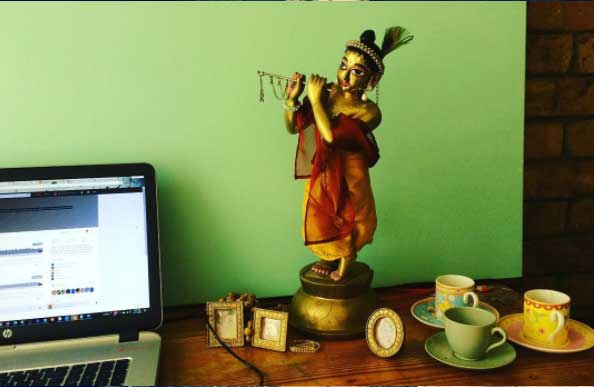
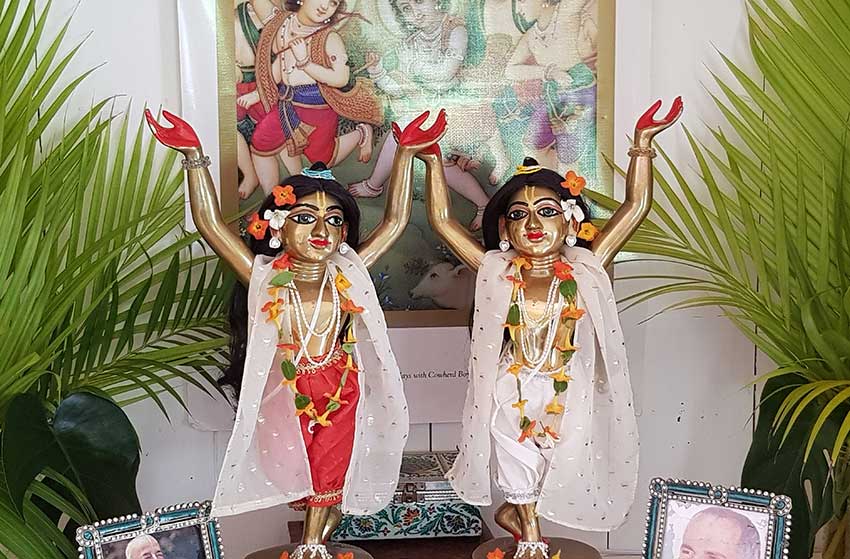
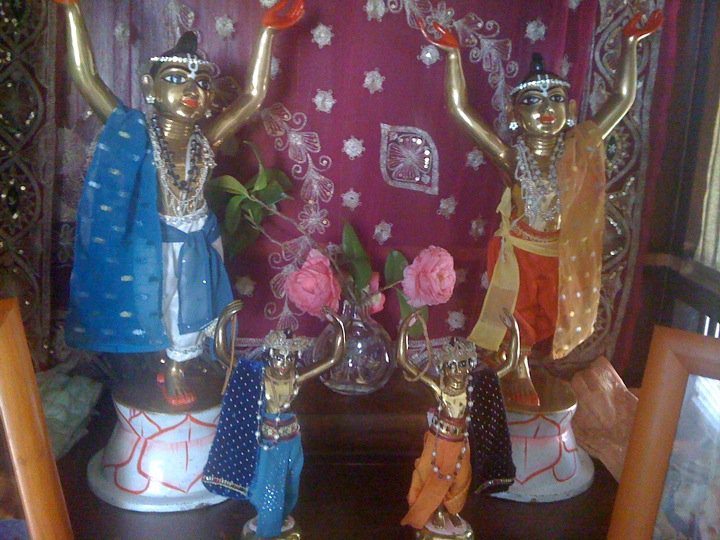
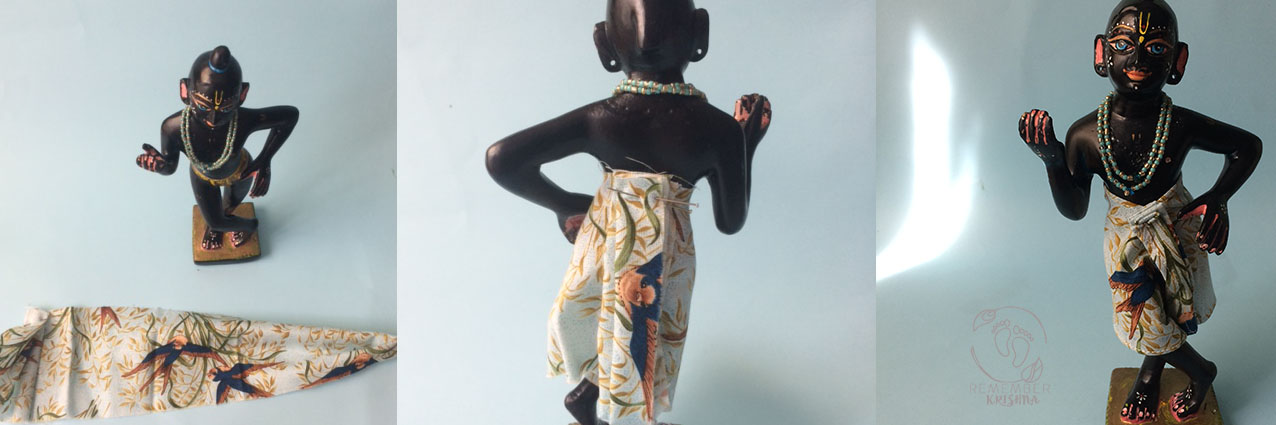
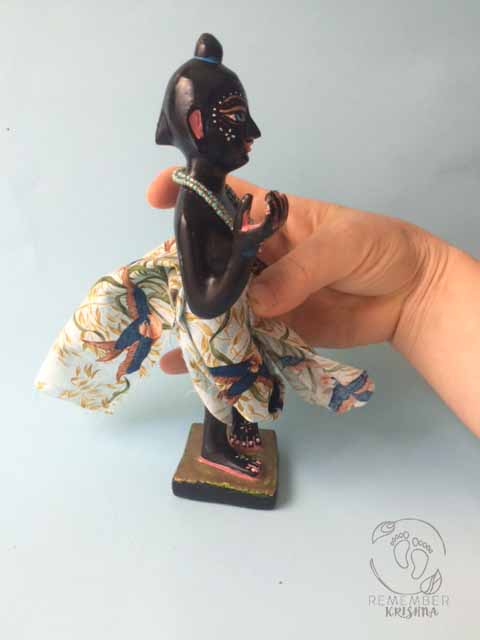
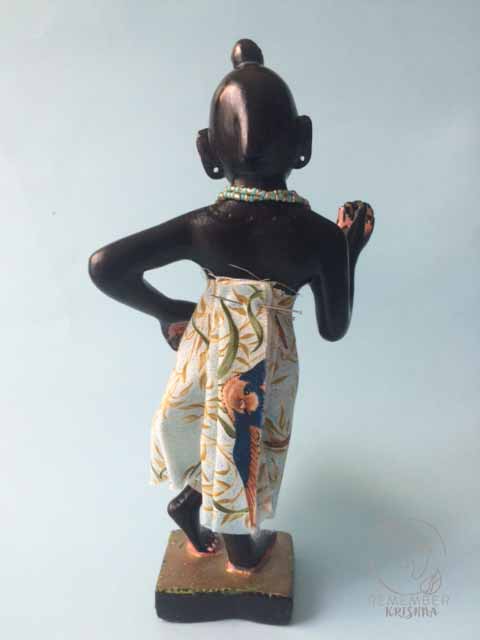
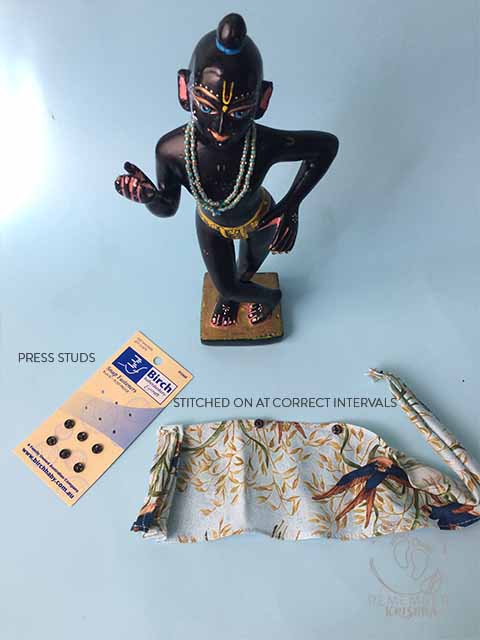
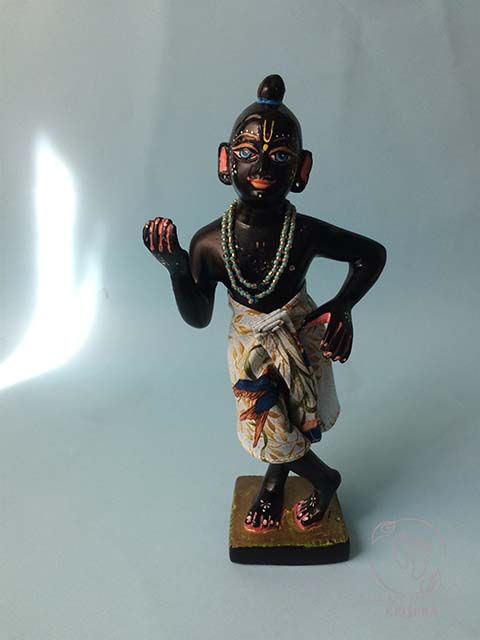
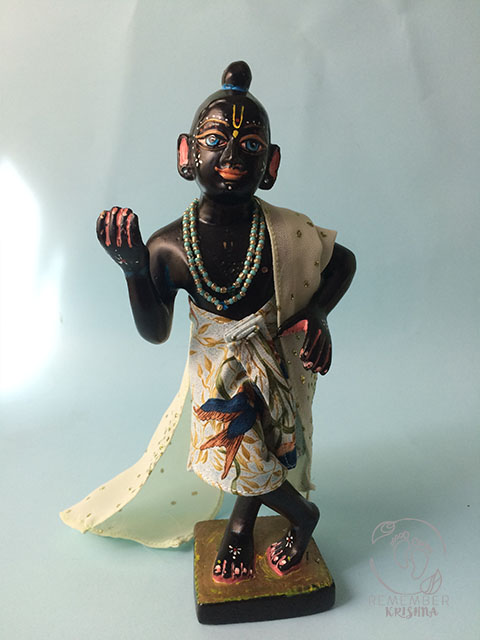
When it comes to measuring marble vs metal deities for new Shringar, many devotees are surprised to find that ’12 inches’ doesn’t always mean the same thing! To get the perfect fit, we first calculate the total height. We measure from the base to the top of the hair bun.For Gaura Nitai, we measure to the tips of Their outstretched fingers.
However, the material of the form is the most important factor. Measuring a metal deity requires a completely different approach than measuring marble. (We will stick to these two for now. I don’t yet have enough experience with wooden forms to offer advice there!)
The Biggest Challenge when Measuring Marble vs Metal Deities
There are a few marked differences between these materials. When I receive deity garment requests, I always ask for photos first. This helps me determine if the form is marble or metal. Height is the first major difference.
A metal deity has a large, heavy base. This base is usually about a quarter of the overall height. It is required for the stability of the metal form. In contrast, a marble deity rarely has a base more than 1 inch thick. A thicker marble base would place too much weight strain on the form. This could cause the marble to break.
Understanding the Proportions
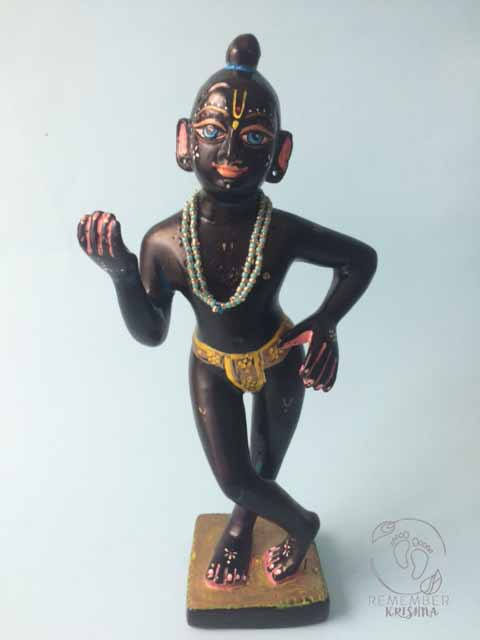
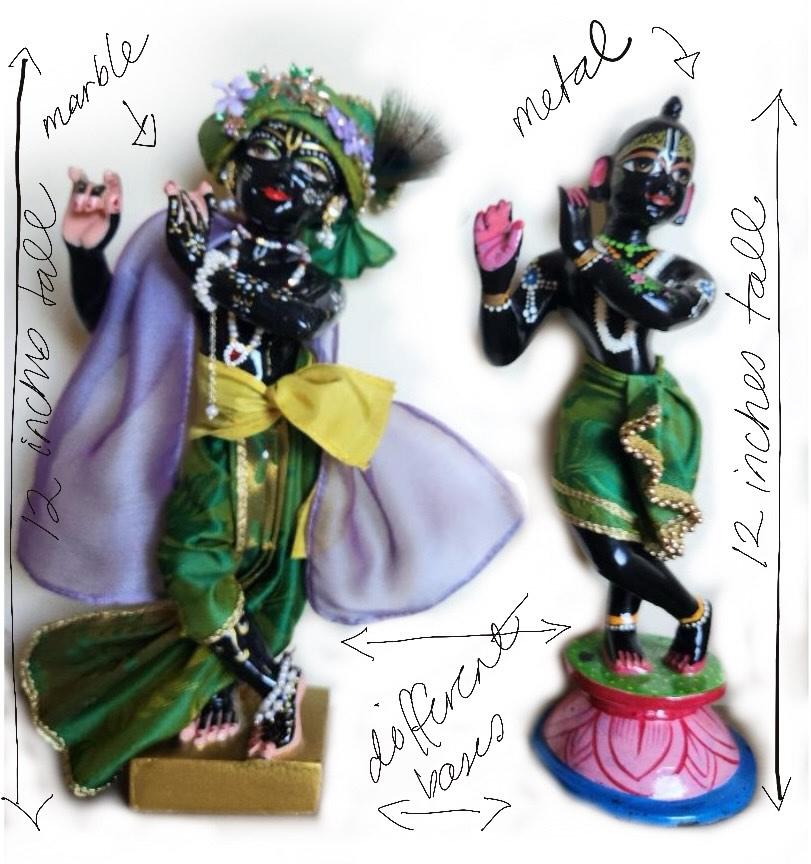
Let’s look at a 12-inch Krishna form. A marble Krishna will be mostly body height, minus just 1 inch for the base. However, a 12-inch metal Krishna is often a 9-inch body on a 3-inch base.
This affects every measurement. It changes the leg length, the waist, and even the head circumference. Even so, “deity walas” still call the metal form a “12-inch deity.” This leads to miscommunications. Sometimes a pujari might not count the base at all.
The Visual Difference
To help you visualize this, I’ve put together an illustration. You’ll see that while both Krishnas are technically “12 inches tall,” the one on the left has much more “body” to dress than the one on the right!
When we work out the height for Gaura Nitai, we calculate from the bottom of the base to the tips of Their outstretched fingers. Just like with Krishna, we have to consider if They are made from metal or marble because it changes the body proportions completely.
Measuring Gaura Nitai: Metal vs Marble
When we work out the height for Gaura Nitai, we measure to the tips of Their outstretched fingers. Just like with Krishna, we must consider the material. It changes the body proportions completely.
In a 12-inch set of Gaura Nitai, much of that height is the space between Their heads and fingertips. If They are metal, They have a large, heavy base. This leaves very little room for the actual body. A 12-inch metal Gaura Nitai might only have a 6 or 7-inch torso to dress.
If They are marble, the base is only about 1 inch. This means the body is much longer, even though the total height is still 12 inches.
Why Precision Matters
This is why I can’t use “total height” alone to make Their clothes. If I made a shirt based only on the 12-inch measurement, it would be way too big for Their actual torso. This affects the dhoti length, the shirt size, and where the waist falls. When you send me photos for Gaura Nitai, it is very helpful to show the measurement of the “Body Height” (from the base to the shoulder) separately from the “Total Height” (to the fingertips).
I’ve had many conversations with pujaris who don’t count the base in their measurements, which can lead to a Shringar that doesn’t sit quite right. This is exactly why, when you message me, the first thing I’ll ask for is a photo. Seeing His form helps me immediately identify if He is metal or marble and the pose the form is in, so I can adjust my patterns accordingly.
Whether the material is metal, marble or other, He deserves a fit that allows Him to stand comfortably and elegantly. Next time you measure your Lord, keep the base in mind—it’s the secret to a perfect fit.
Looking for more guidance on your Deity journey? If you haven’t brought your Lord home yet and are still deciding which material is right for your seva, you might find my post on [Choosing Between Metal and Marble Deities: A Devotee’s Guide] helpful. It covers everything from the daily care routines to the unique “mood” each material brings to the altar.
Stay Connected: For more Shringar inspiration and behind-the-scenes looks at my studio, [subscribe to my YouTube channel]